Eastern Redbud Tree: An Early Springtime Ally for Foragers & Herbalists
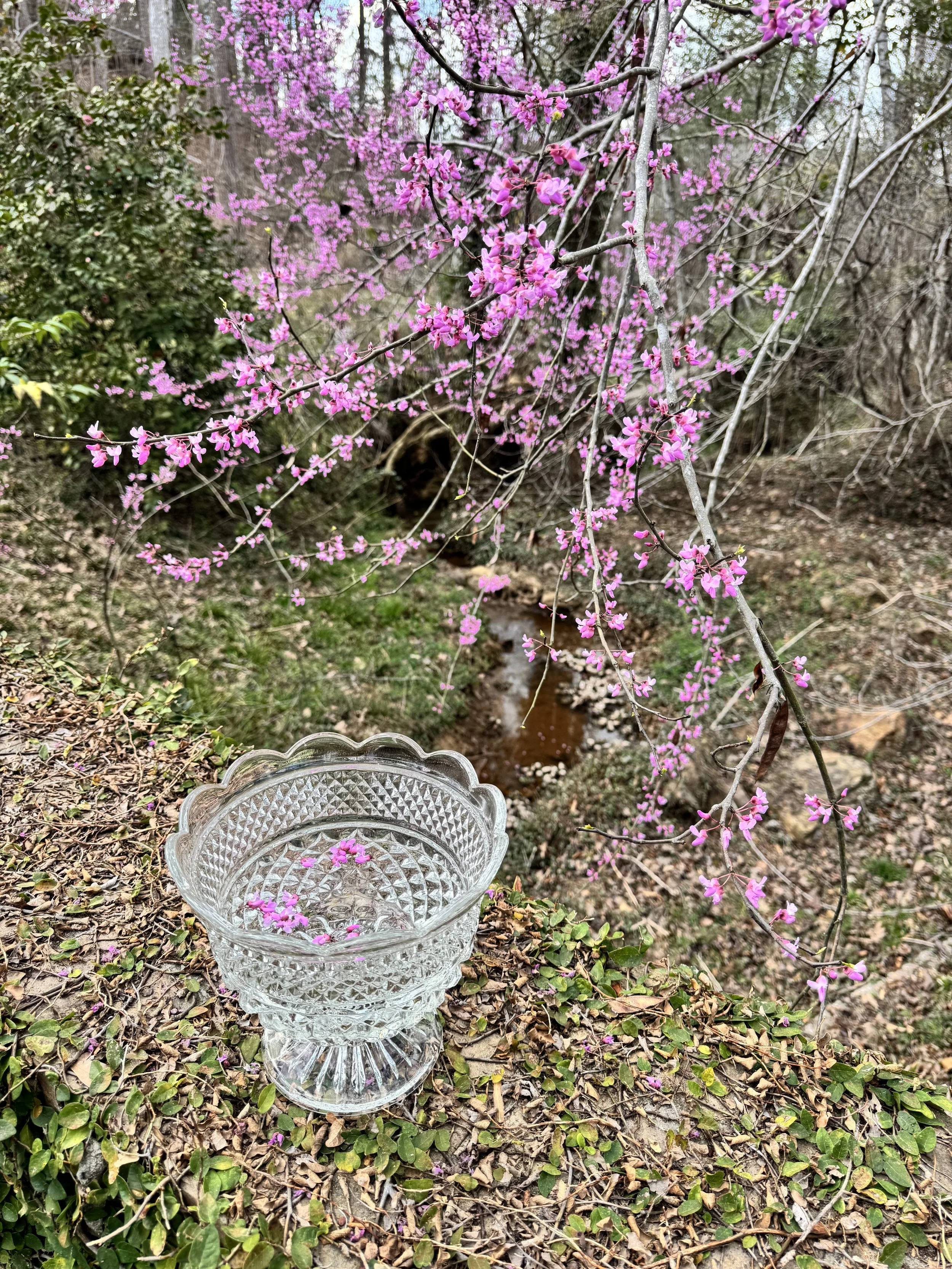
Eastern Redbud Tree (Cercis canadensis)
Eastern redbud trees are one of my favorite first edibles I search for to tell me that spring has arrived. There’s something about spotting those bright pink blossoms glowing along the forest edge that is a signal from the land: we’ve made it through winter. They are native and common across the eastern and south-central United States, even into Mexico. You can find them in wet open areas, wood edges, and as understory trees in forests.
Eastern redbud is prolifically planted as an ornamental due to its showy springtime flowers and beautiful heart-shaped leaves. They are quite graceful with arching branches that always seem to pull the eye. But be sure to be on the lookout, they are quick bloomers and only last for a few weeks!
Other Names: Judas tree
Taxonomy: Fabaceae (legume/pea family)
Foraging & Edibility: The blossoms are the most commonly foraged part. Flowers can be eaten fresh and have a mildly sweet, floral taste with a hint of pea-like freshness. Throw them into a fresh salad and use them as a garnish for desserts or spring dishes. They can also be collected to make into tea, jellies, jams, or pickled. I have even heard that they make an excellent relish for hot dogs. In Mexico, it is common to fry the flowers: pan-fried, battered, or added to muffins. Harvest flowers when they are freshly opened, pink/magenta, and vibrant. Avoid any that are browning or wilted. Young pods and their seeds can also be eaten, but do not eat the mature seed pods. Gather the seed pods when they are young and purple. Add them to stir-frys or finely chop them to add to dressings and dips.
Medicinal Use: Indigenous peoples of the Alabama, Cherokee, Delaware, Kiowa, and Oklahoma tribes knew and were in relationship to the redbud tree. Traditionally, the inner bark was made into a decoction or cold infusion. It was popular to us make a tea to reduce symptoms of whooping cough. Cold infusions of the roots and inner bark helped to break fevers, reduce congestion, quell vomiting, and treat dysentery.
Wildlife Relationships: Seeds are eaten by various birds, including bobwhite quails, pheasants, and goldfinches. White-tailed deer love to eat the leaves and browse on the young trees. The native bees love them too, so be sure to only pick a few from each tree to make sure there are plenty for them!
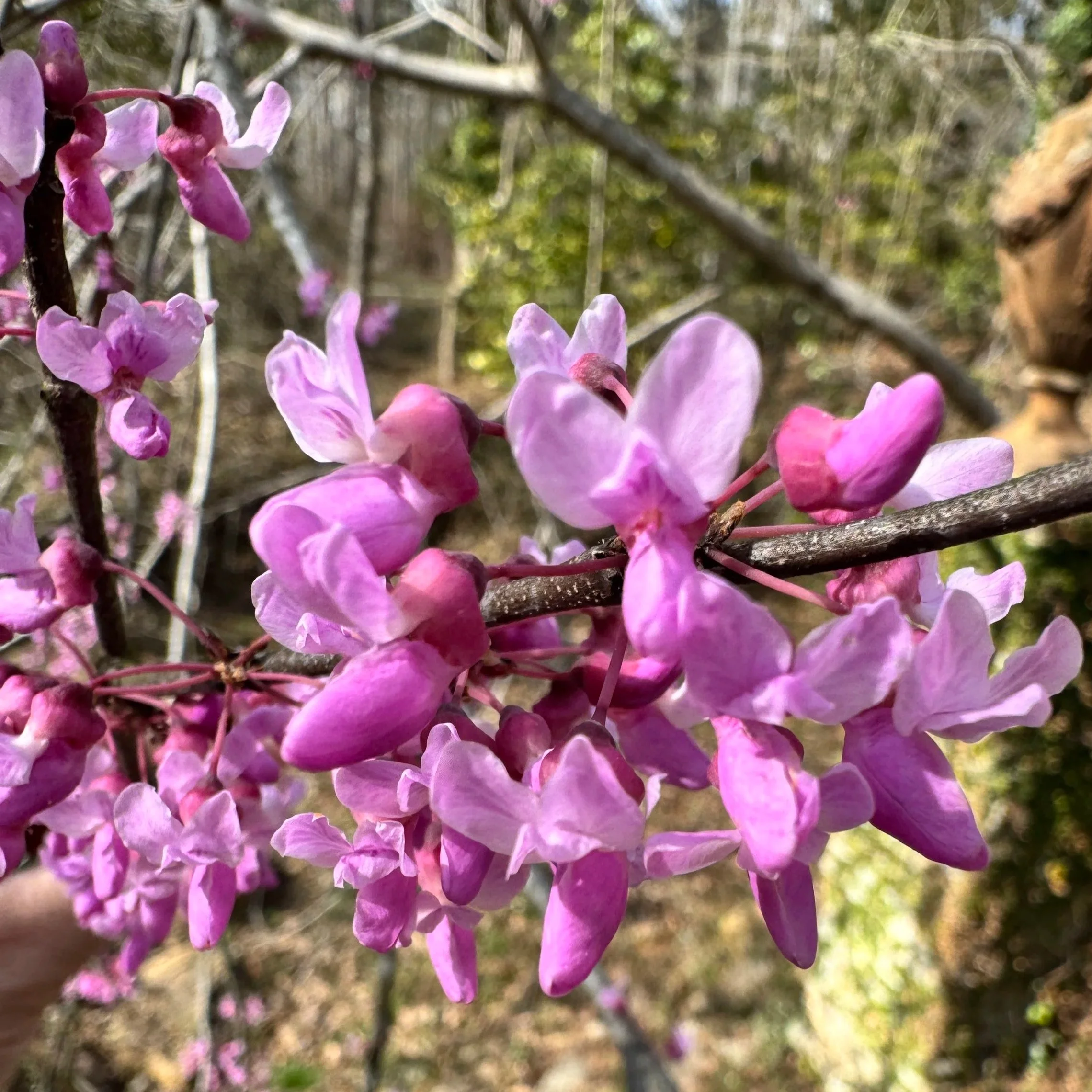
Flower Essence & Mental Well-Being
Their flower essence holds a lot of medicine. Flower essences are diluted energetic remedies designed to balance emotions and support mental well-being. Redbud flowers bring a kind of sensual renewal to the emotional body, inviting you to soften into presence, receptivity, and the sacred flow of life. Eastern redbud flower essence calls on us to show up in healthier ways so we can be in service to our communities and each other. Redbud teaches us open-heartedness, power in vulnerability, and how to communicate our authentic feelings. They strengthen us to take a more engaged role in our lives and relationships so that we can co-create healthy and reciprocal relationships. Redbud helps us to be open to being embraced and supported by others. This essence can also help support relationships that have grown apart and mend past hurts. We all could benefit from their medicine 💗
Cited Literature
Bennett, C. 2015. Southeast Foraging. Portland, Oregon. Timber Press.
Dave's Garden. 2020. Tasty Treats from the Redbud Tree. <https://davesgarden.com/guides/articles/tasty-treats-from-the-redbud-tree-cercis-canadensis>. Accessed 17 March 2026.
Thayer, S. 2023. Sam Thayer’s Field Guide to Wild Plants of Eastern and Central North America. Weyerhaeuser, WI. Forager’s Harvest Press.
United States Department of Agriculture. [USDA]. 2001. Eastern Redbud. <https://plants.sc.egov.usda.gov/DocumentLibrary/plantguide/pdf/cs_ceca4.pdf>. Accessed 17 March 2026.
United States Forest Service [USFS]. 1994. Species: Cercis canadensis. <https://www.fs.usda.gov/database/feis/plants/tree/cercan/all.html>. Accessed 17 March 2026.
Note: Information here is not intended to be medical advice, rather it is educational information. Please be sure to contact a licensed medical professional before consuming any plants. This information is not intended to diagnose, treat, prevent, or cure any illness. The information in this blog has not been evaluated by the FDA.